Fragmented evidence
Images, reports and updates can sit across separate systems, making review and comparison slower.

Road intelligence for highways teams
ARCH connects road-condition evidence, operational review, prioritisation and audit-ready workflows for highways teams and maintenance contractors - while working alongside existing operational systems.
The operational gap
Highways teams already receive inspection records, resident reports, images and contractor updates. The challenge is deciding what needs attention first, recording why that decision was made and keeping the evidence connected as work progresses.
ARCH is the intelligence and workflow layer designed to connect captured road evidence with the systems used to inspect, review, prioritise, deliver and report maintenance activity.
Images, reports and updates can sit across separate systems, making review and comparison slower.
A defect signal alone does not explain operational risk, urgency or the appropriate next step.
Authorities and contractors need a clear record of what was reviewed, decided, assigned and closed.
ARCH platform
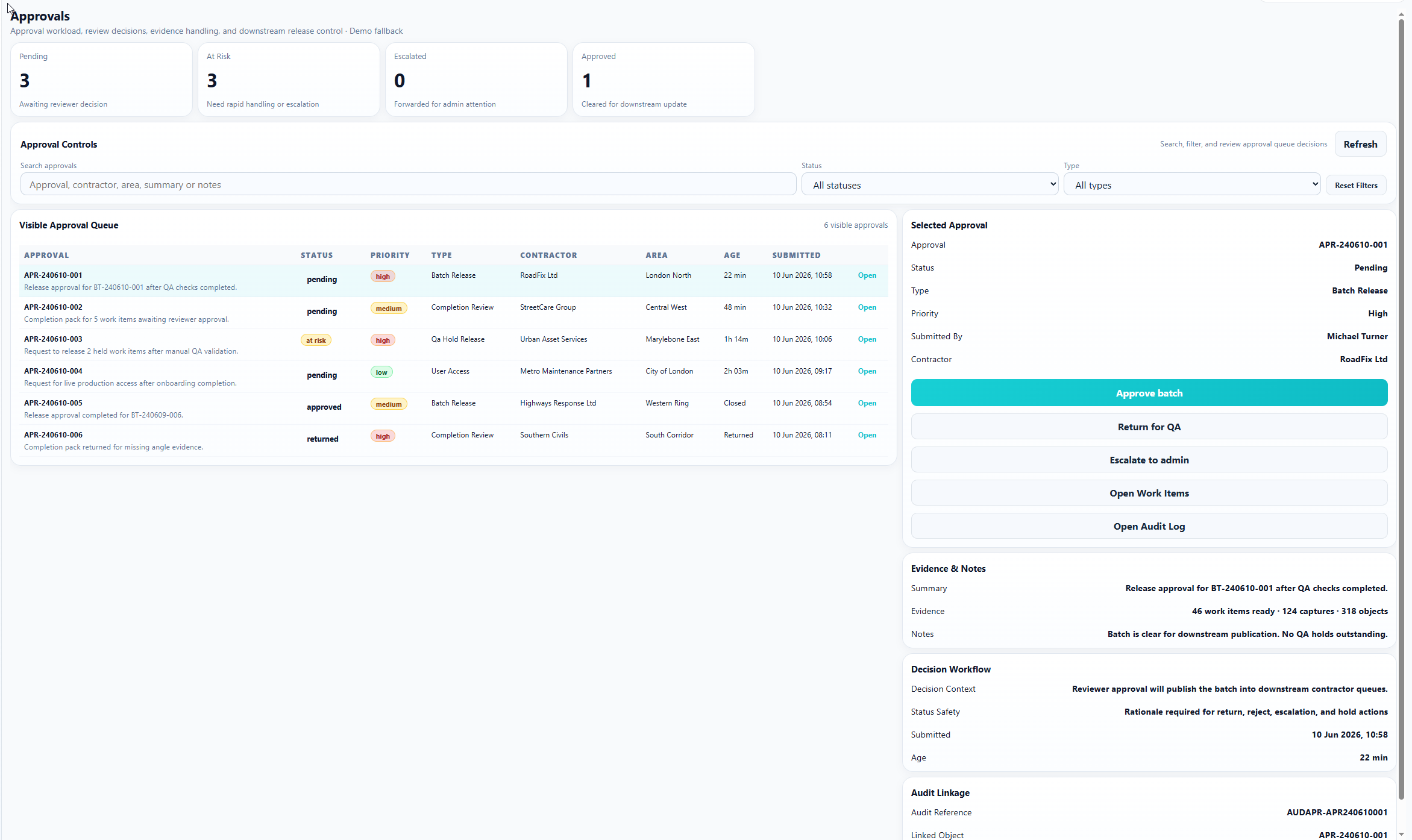
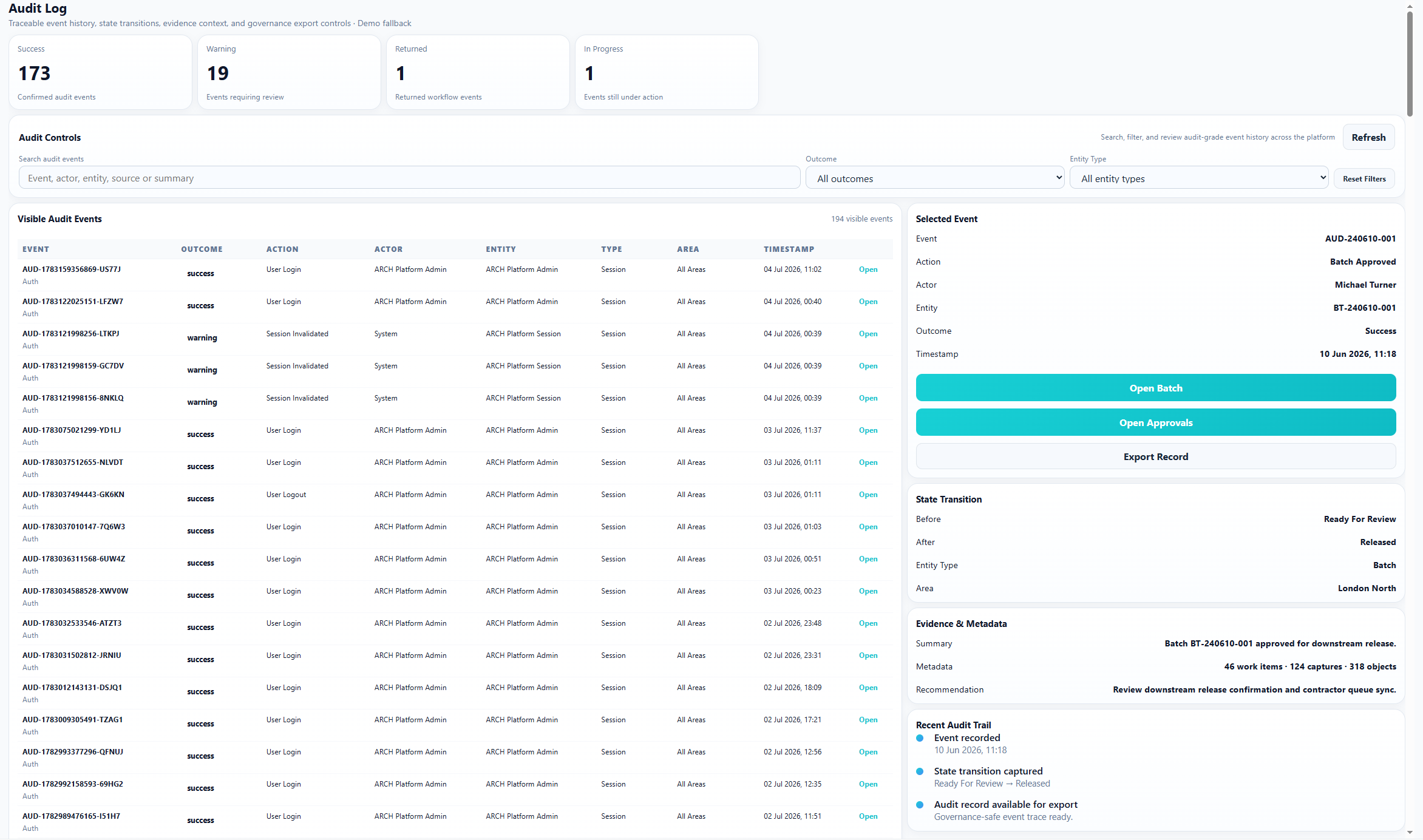
ARCH brings together work items, map context, evidence, review states, capture-node status and audit history within a controlled real-data environment. Current work is focused on evidence governance, production hardening, performance validation, resilience and controlled scaling ahead of wider deployment.
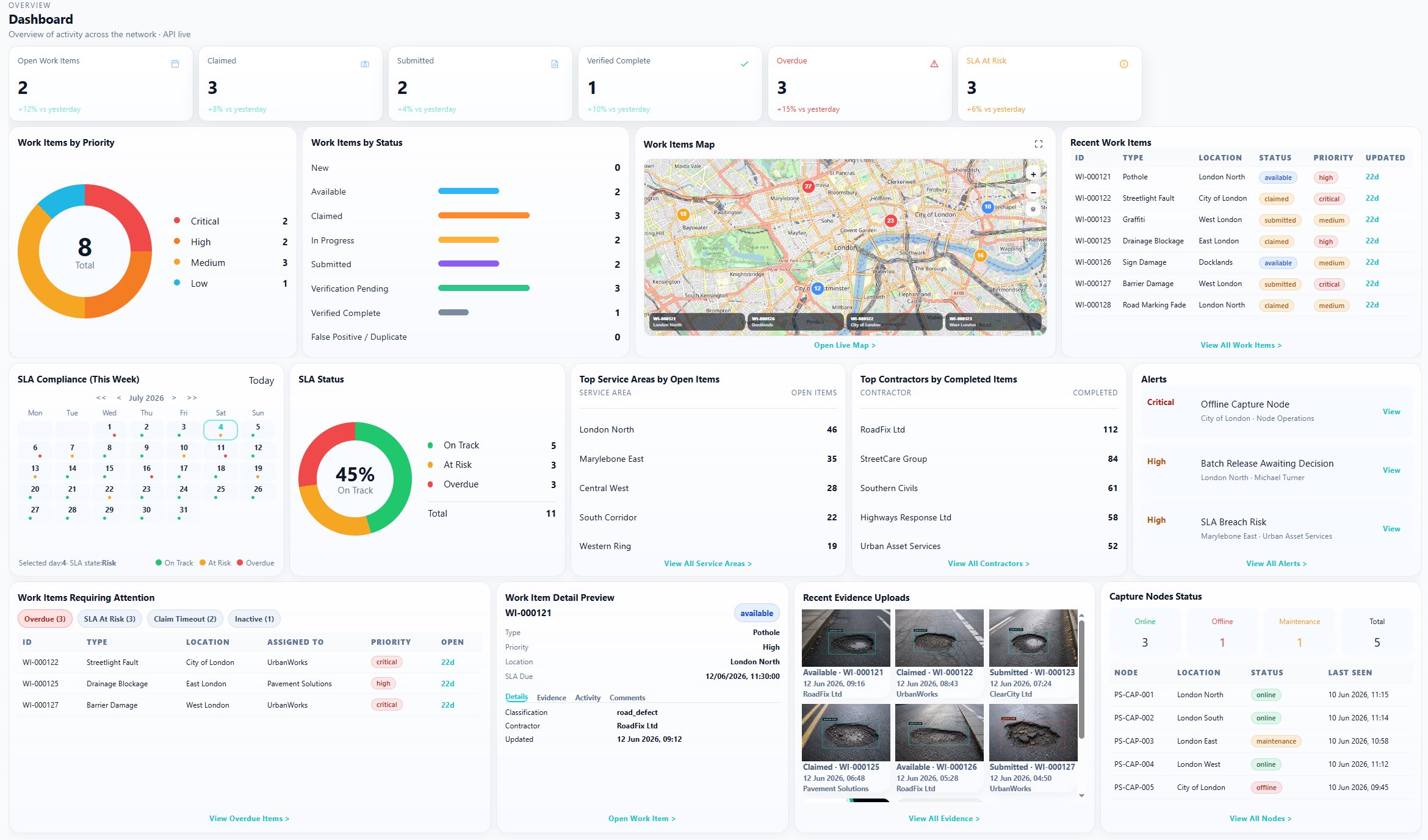
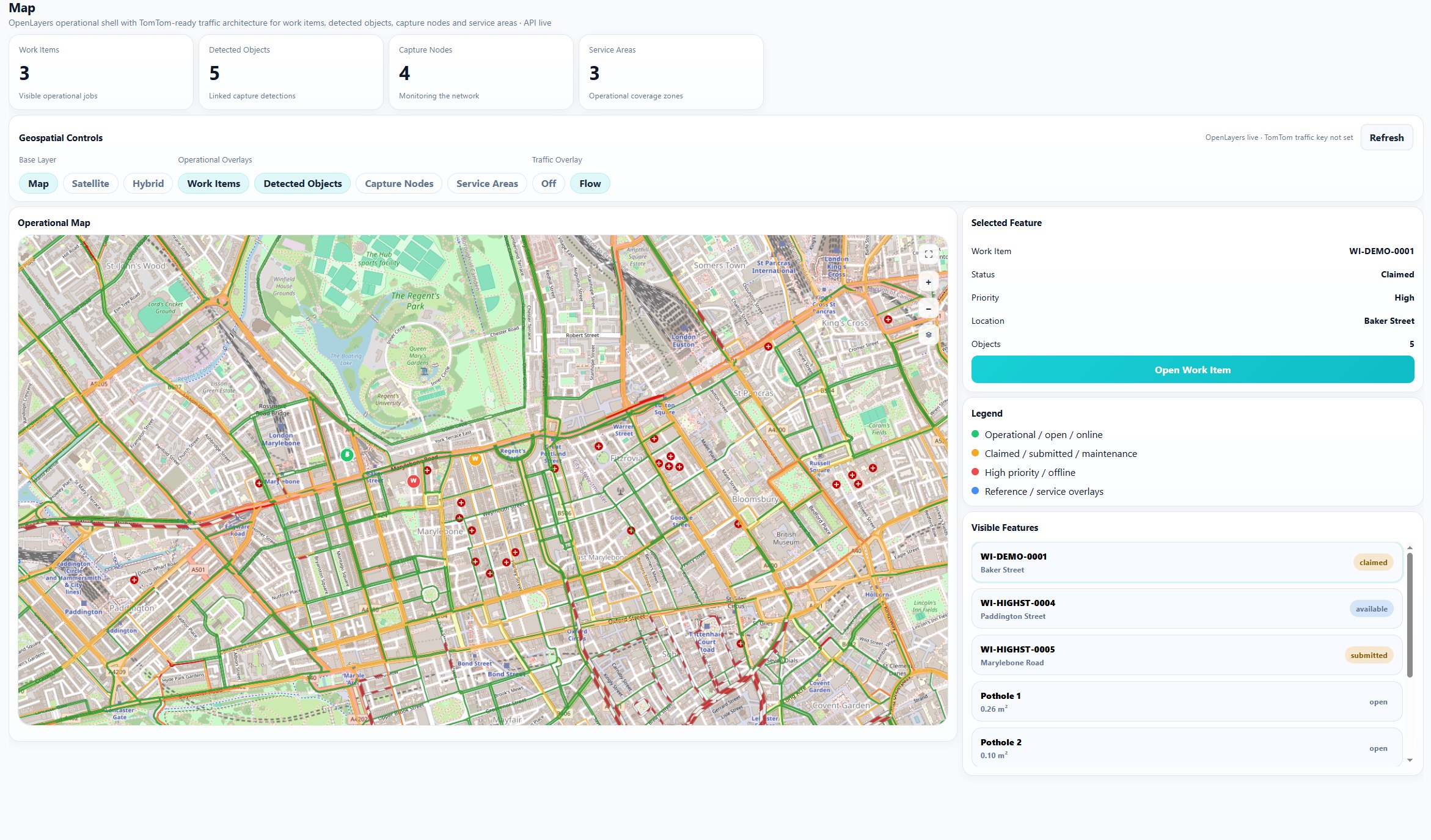
ARCH workflow
Receive route capture, inspector submissions or agreed third-party road-condition data.
Present the suspected defect, location, imagery and supporting metadata for human review.
Accept, reject, reprioritise or request further evidence with the reviewer and reason retained.
Prepare an approved work item for assignment, export or integration with existing systems.
Keep status changes, evidence, approvals and completion records connected throughout the lifecycle.
Partner outcomes
The authority and contractor propositions are related but distinct. Controlled evaluations are intended to establish where ARCH improves evidence handling, prioritisation and traceability without adding another reporting burden.
For councils and highways teams
Contractor workflow focus
These are controlled-evaluation hypotheses and are not presented as proven customer outcomes.
Controlled evaluation focus
A controlled evaluation should test one representative end-to-end workflow using an agreed route, operating area or dataset. It is intended to work alongside, rather than replace, an authority’s or contractor’s existing asset-management or work-order platform.
An evaluation partner contributes
An evaluation partner receives
Operational evaluation brief
A practical overview for highway authorities and maintenance contractors covering ARCH's current stage, the operational workflow, evaluation scope, partner responsibilities, expected outputs and governance approach.
Governance summary
Scope and ownership: routes, users, outputs, data ownership and responsibilities agreed in advance.
Privacy and security: DPIA screening, retention, access controls and processing terms considered where applicable.
Evaluation route: discovery first, then a separate formal agreement before any live evaluation, data access or deployment.
Contact Auztec
Initial conversations focus on operational fit, evidence and governance requirements, and whether ARCH could address a defined evidence, prioritisation or workflow problem.